Most of our workshops are informal roundtables, and this one was a good example of why we like that format. Rather than running through slides for an hour, we started with the people in the room – what they do, where they want to take their business, and what is standing in the way – and then looked at how FlexUp could help in each specific case.
The mix was unusually international: an ayurvedic medicine producer and real estate entrepreneur from near Mumbai, a flour mill owner from Pakistan, and a startup advisor splitting his time between Paris and Canada. The introduction to FlexUp presented during the session was recorded, so anyone who could not attend can still follow it. (Recording link to be added once published.)
What struck me, listening to three businesses that on paper have nothing in common, was how the same idea applied to all of them: stop treating the people you depend on as counterparties to be paid and managed, and start treating them as partners who share the risk and the upside. Here is how that played out in each case.
A flour mill in Pakistan: turning suppliers into associates
Muhammad runs a flour mill. He buys grain from the market and from farmers, mills it into different types of flour, and also offers a cleaning service – removing debris from the grain before it is milled. The operation is fully self-sustained, running on its own solar panels.
This is exactly the kind of business FlexUp was built for. A mill like this depends on a small number of farmers who supply it season after season. The relationship is long-term by nature, but the structure around it is usually transactional: the farmer delivers, the mill pays, and neither side has any stake in the other's success.
FlexUp lets Muhammad change that. Suppose he wants to expand the mill – buy additional equipment, increase capacity, or open a second mill in another location. Instead of carrying the full cost himself or taking on a rigid bank loan, he can invite his partner farmers to become associates in the project. He funds, say, 50% of the investment, and his farmers fund the other 50% – in cash, or through the value of the grain they supply.
That single change rewires the incentives. The farmers are no longer just sellers hoping for a good price; they are co-owners who benefit when the mill grows and prospers. The alignment is genuine and long-lasting, and it gives Muhammad a way to grow without shouldering all the risk alone.
Ayurvedic medicine from India to the world: joint ventures across borders
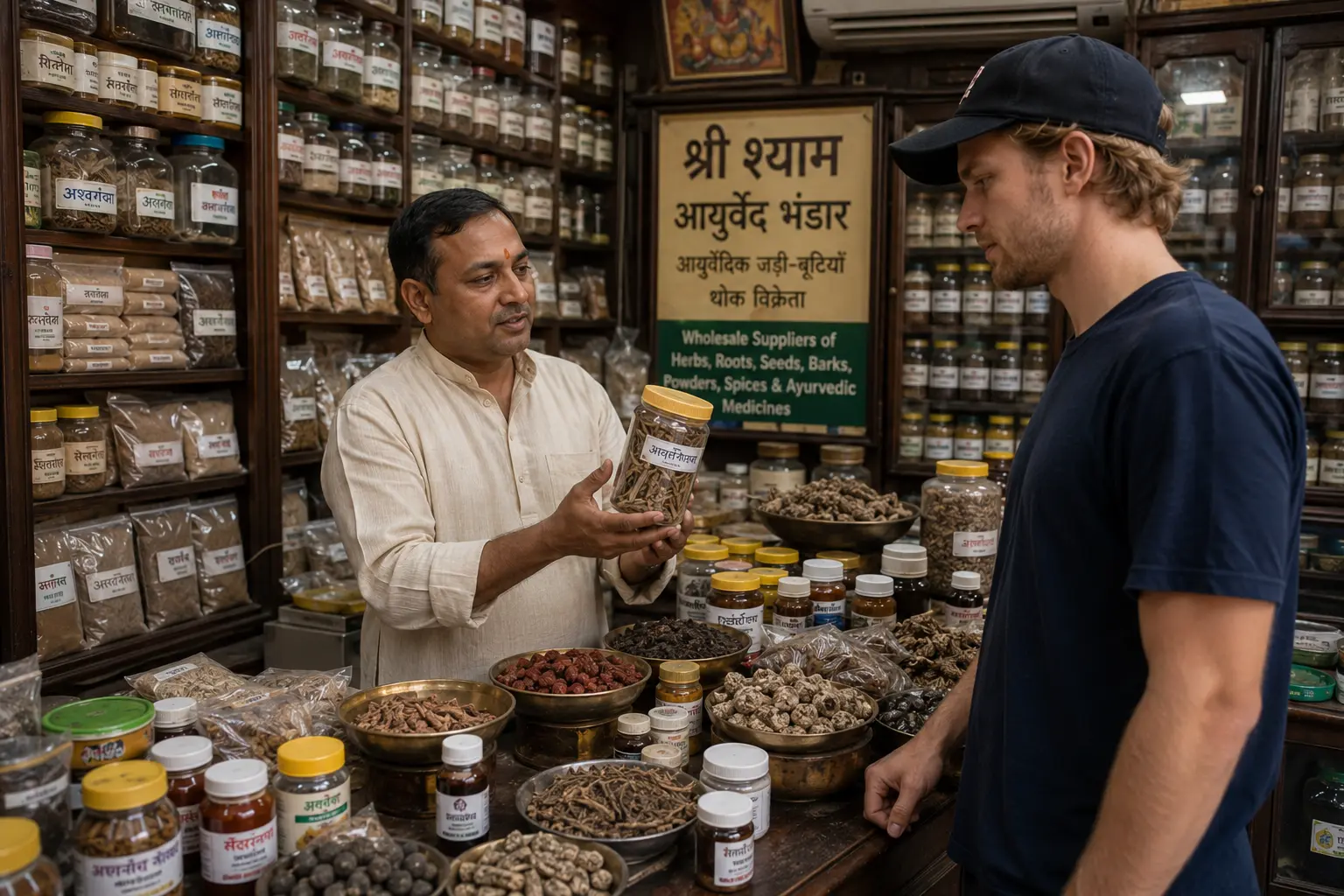
Diwakar runs two very different businesses near Mumbai: a real estate business, and an ayurvedic medicine business he has built with his father over more than thirty years. The ayurvedic business is where FlexUp fits most naturally. He has a strong supplier base, high-quality products, and established long-term clients – but, so far, within his own state in India.
His ambition is to expand: to other states across India, and then internationally. The obstacle is the one every exporter knows. A new distributor abroad may love the product but lack the cash to buy in volume, and Diwakar has no easy way to share the risk of opening a market he does not yet understand.
This is precisely the situation we are already solving for another FlexUp project – a producer in Cameroon drying and packaging okra to sell into Nigeria, their first export market, through a local distributor. Rather than a simple buy-sell arrangement, they are using FlexUp to set up a joint venture so that both sides share the risk and the profit of the new market they are building together.
Diwakar can do the same. When he finds a distributor in a new state or a new country, he does not have to ask them to pay the full price upfront. The sale can be structured as, for example, 50% cash and 50% equity – the distributor invests the other half of the value into the partnership and becomes an associate in the venture. Diwakar reduces the cash barrier that keeps good partners out, and the distributor now has a real stake in selling the product well. Thirty years of quality and reputation become the foundation for win-win partnerships that can scale across borders.
The advisor's role: John, collaboration, and the FlexUp ecosystem
John was the third voice in the room, and he plays a different role. He is already an advisor to early-stage startups – helping them with operations, growth, fundraising, go-to-market strategy, regulatory navigation, pitch decks, and financials – with a particular focus on helping French companies enter the North American market.
That profile is a natural fit for the FlexUp ecosystem, and there are two complementary ways John can be part of it. He could work directly with the FlexUp team, or join as an independent collaborator – a FlexUp partner who brings us business and to whom we bring business in return. The relationship runs both ways: John can introduce FlexUp to his own clients whenever it fits their situation, and we can introduce FlexUp users to John whenever they need the kind of fundraising and go-to-market support he provides.
This is the fourth pillar of FlexUp – the ecosystem – in action. The platform grows through advisors like John, who already have the trust of the founders they work with. And because FlexUp applies the same model to everyone, an advisor does not have to stay outside the system: the services they deliver can be paid in a mix of cash and equity, turning a referral relationship into a genuine stake in the businesses they help build. There is a clear path for any new partner, from referring clients, to onboarding them onto the platform, to delivering services directly, to eventually operating a local FlexUp hub.
One model behind all three
Three very different businesses, one idea. A flour mill, an ayurvedic exporter, and a startup advisor have very little in common – except that each of them depends on people whose interests are not currently aligned with their own.
FlexUp's answer is the same in every case: the principle of non-discrimination. A supplier, a client, an investor, an advisor, and an employee can all be rewarded with the same flexible mix of cash and equity, so that everyone you work with has a reason to want your business to succeed. Muhammad's farmers, Diwakar's distributors, and John's clients are all, in the end, candidates to become associates rather than counterparties. That is what turns a one-off transaction into a lasting, win-win partnership – and it is what FlexUp is built to make simple.
Want to join our next workshop?
Our workshops are open to entrepreneurs, founders, and professionals who want to explore fairer ways to structure partnerships, finance growth, and collaborate when cash is limited. They are equally open to the advisors, mentors, and investors who want to help startups thrive – and grow alongside them.
You can find the schedule and register at: www.flexup.org/events
Further reading
- Startup Networking Workshop #14, Online – reaching founders through the wider FlexUp ecosystem: www.flexup.org/blog/workshops-8
- How FlexUp works: www.flexup.org/economic-model
Startup Networking Workshop #16, Online